Material & loading
Material composition, particle size or part dimensions, loading container and batch size.
ZYGK / Continuous sintering
Continuous roller transport and zoned heating for zirconia, ceramic materials and battery powders. Loading, atmosphere and temperature profile are configured for the material.
Discuss your processAtmosphere roller hearth furnace
01 / 06Engineering
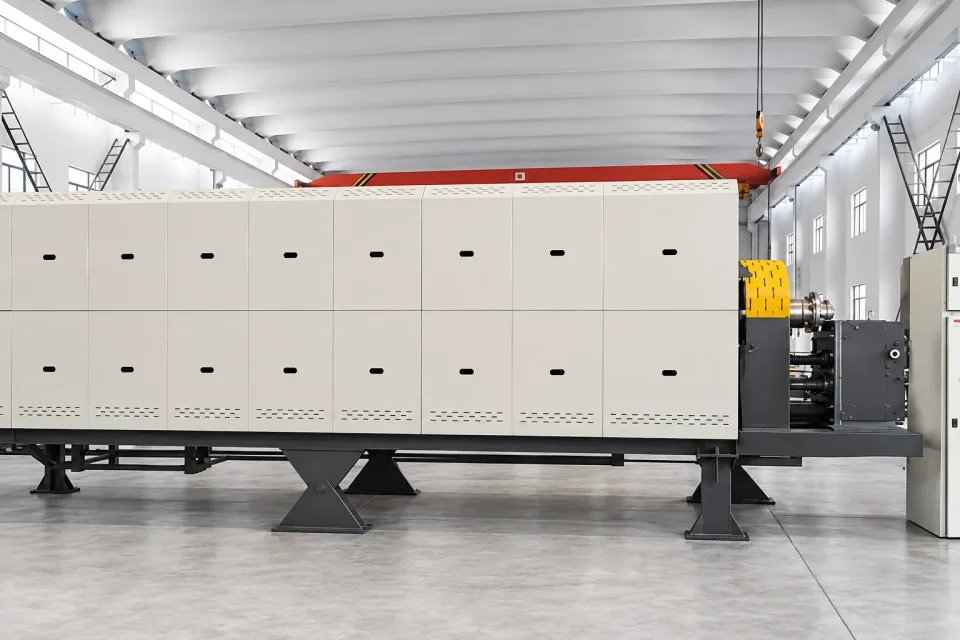
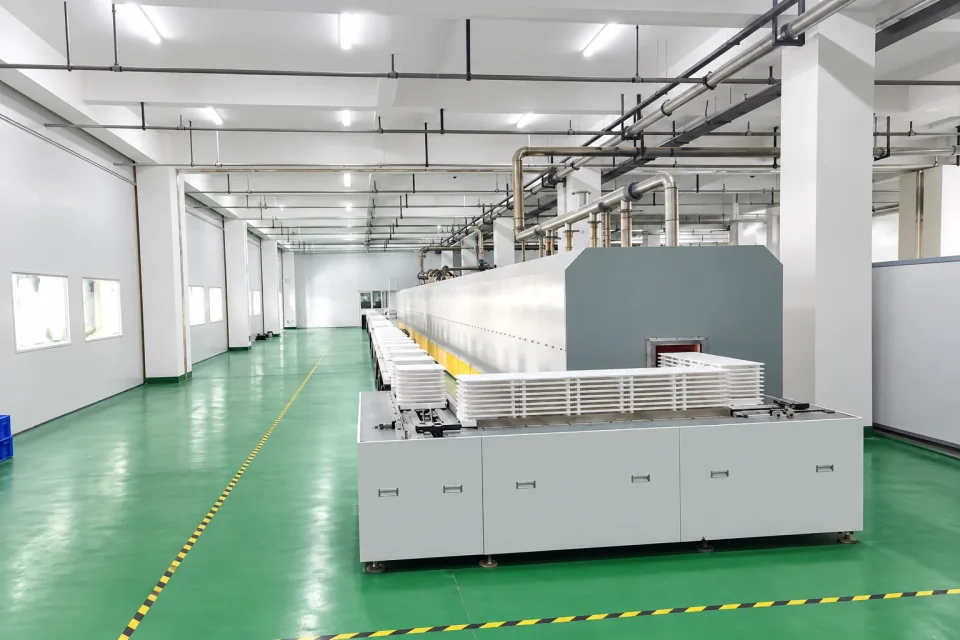
Closely pitched rollers carry the load through the heated chamber without interruption. Roller pitch and the loading method have to be fixed together with the actual carrier — setter plate, saggar or tray — not chosen from a catalogue.
The original design uses top and bottom heating with side exhaust. The dewatering zone at low temperature and the high-temperature zone use different heating elements, each matched to the conditions in that zone.
It fits when: the parts keep their shape and can lie flat on a setter plate or in a saggar; the product is a single grade in high volume with a demand for continuous 24-hour operation; the process temperature stays at or below 1500 °C; the process needs oxidising, inert or reducing atmosphere but not vacuum.
It does not fit — and this is where most projects go wrong: the process calls for vacuum. The atmosphere list for this model is oxidising, inert and reducing; vacuum is not included, so a vacuum process belongs on an elevator or pusher furnace. Process temperature above 1500 °C. Frequent grade changes within one shift: roller pitch, zone layout and the number of saggar columns are designed around one load, and changing the product means re-checking the whole furnace. Single heavy parts that the rollers cannot carry.
The one-line test: if the parts can go into a saggar and queue up, a roller hearth is the right family. If they cannot, it is not.
Buyers usually open with "what is the largest furnace you build". That question leads the project in the wrong direction. The order should be reversed.
Q: Can a roller hearth be pumped down to vacuum? The atmosphere list for this model is oxidising, inert and reducing; vacuum is not part of it. If the process needs vacuum, look at the atmosphere elevator or atmosphere pusher furnace, where vacuum is listed in the specification.
Q: Same temperature, so why do quotations differ by a factor of two? The difference is rarely the shell. It sits in three places you cannot see: the number of heating zones, the roller material and its temperature rating, and the number of independent control points. Fewer zones and fewer control points mean a wider temperature spread across the chamber — and that is where the money was saved.
Q: Will the furnace still work when we change product later? If the thermal profile or the loading method changes, roller pitch and zone layout have to be re-checked. A close variant within the same material family is usually just a profile change. A part of very different size is a furnace modification.
ZYGK
Swipe horizontally to view all configurations.
| Parameter | ZYGK-80-1300 | ZYGK-120-1300 | ZYGK-300-1300 | ZYGK-800-1300 |
|---|---|---|---|---|
| Maximum temperature | 1350 °C | 1350 °C | 1350 °C | 1350 °C |
| Working temperature | 1280 °C | 1280 °C | 1280 °C | 1280 °C |
| Heating power | 80 kW | 120 kW | 300 kW | 800 kW |
| Heating zones | 9 | 14 | 19 | 38 |
| Control points | 13 | 20 | 38 | 72 |
| Supply | 380 V / 3~ | 380 V / 3~ | 380 V / 3~ | 380 V / 3~ |
| Control accuracy | ≤ ±1 °C | ≤ ±1 °C | ≤ ±1 °C | ≤ ±1 °C |
| Roller pitch | 75 mm | 75 mm | 75 mm | 85 mm |
| Roller diameter | Ø42 mm | Ø42 mm | Ø42 mm | Ø60 mm |
The data below describe reference configurations. Final specifications, including power supply and performance requirements, are agreed for your project.
Catalog values describe reference configurations. Working space, loading method, roller material and atmosphere circuit are confirmed during technical review.
Discuss your processZKR / Engineering
Share the information below with our international sales team. Our engineers will use it to assess a suitable furnace configuration.
Material composition, particle size or part dimensions, loading container and batch size.
Peak and operating temperatures, heating rate, hold time and cooling requirements.
Process gas, gas quality, exhaust requirements and available electrical supply.
Target throughput, operating schedule, floor space and upstream/downstream equipment.
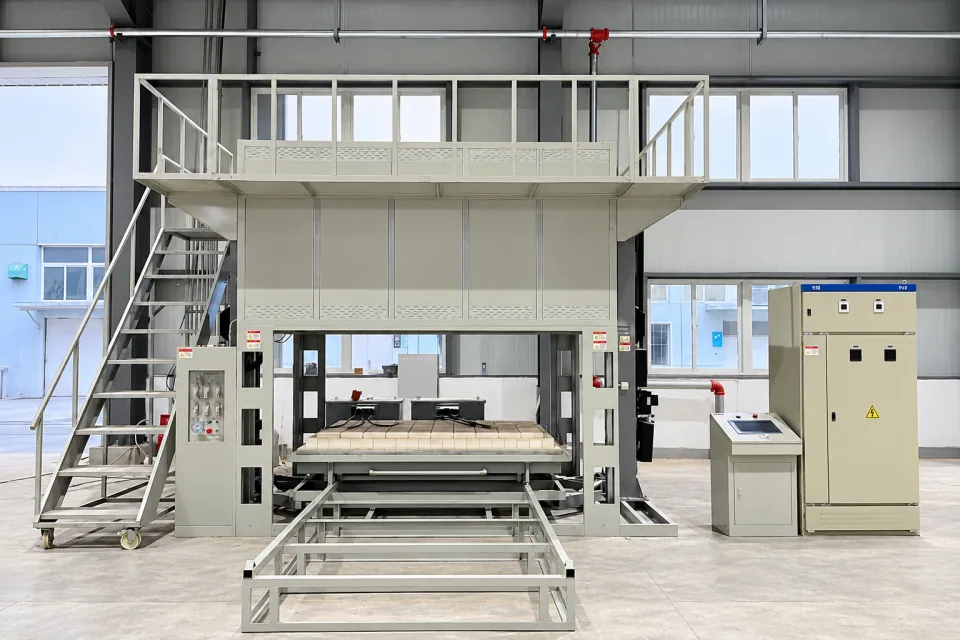
Images show supplied equipment configurations. The presentation image is retouched from the original; other images are original workshop records. Final equipment is defined by the agreed technical proposal.
Contact us
Share your material, temperature profile, atmosphere and target output. Our international sales team will coordinate the technical review with our engineers in Yixing.
Atmosphere roller hearth furnace
* Required fields