Material & loading
Material composition, particle size or part dimensions, loading container and batch size.
ZYHK / Rotating-tube processing
A rotary furnace for powder heat treatment. Tube configuration, feed rate and atmosphere requirements are reviewed together to define the process.
Discuss your processAtmosphere rotary furnace
01 / 03Engineering
The rotating structure moves powder through the heated tube. Suitability has to be judged against powder flow behaviour, particle size and the intended thermal treatment.
Please provide the material, target temperature, feed rate and gas requirement. Our engineering team confirms the tube, the heating system and the gas-sealing arrangement from that information.
It fits when: the material is a powder or a granulate and no saggar is needed; every particle has to be exposed to the same temperature, which means continuous tumbling; the material agglomerates or fuses when it sits in a static pile; in- and outfeed should be continuous and automatic.
It does not fit when: the parts are flat, long or fragile — tumbling destroys them; the material is highly abrasive and low contamination is required — the tube liner and the lifters wear, and the liner material has to be assessed up front; dust emission limits are strict and no off-gas treatment is planned.
The one-line test: if the material is loose — powder or granulate — a rotary furnace belongs in the discussion. If it is a whole part, it does not.
Q: What fill ratio should we actually use? Start from the 10–20 % range and confirm the value with a flow test on your own material. A high angle of repose and poor flow mean taking the lower end.
Q: Will the gas flow carry powder out of the tube? Yes, and this is a common issue with rotary furnaces. The answer is a dust collection or settling stage at the outlet, sized against the powder loss you can accept.
Q: Can it run under vacuum? Vacuum is listed for this model, so yes — but the sealing arrangement and the tube's pressure resistance have to be designed for it. A standard atmospheric model cannot simply be re-labelled.
ZYHK
This product line is specified project by project. The engineering proposal defines the operating envelope and equipment dimensions.
Tube dimensions, residence time and output are specified for each project. Request a technical proposal for your material.
Discuss your processZKR / Engineering
Share the information below with our international sales team. Our engineers will use it to assess a suitable furnace configuration.
Material composition, particle size or part dimensions, loading container and batch size.
Peak and operating temperatures, heating rate, hold time and cooling requirements.
Process gas, gas quality, exhaust requirements and available electrical supply.
Target throughput, operating schedule, floor space and upstream/downstream equipment.
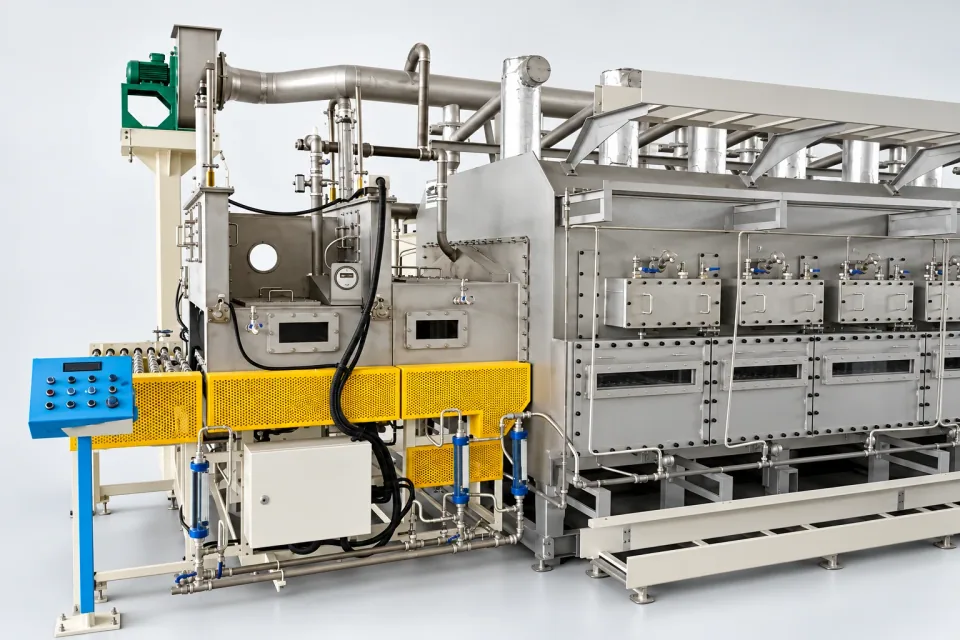
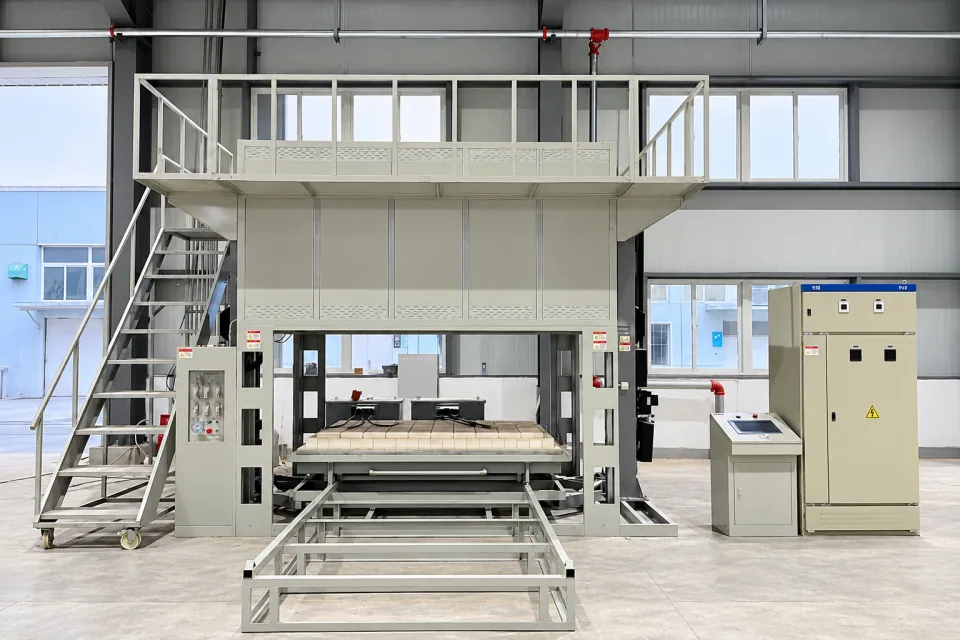
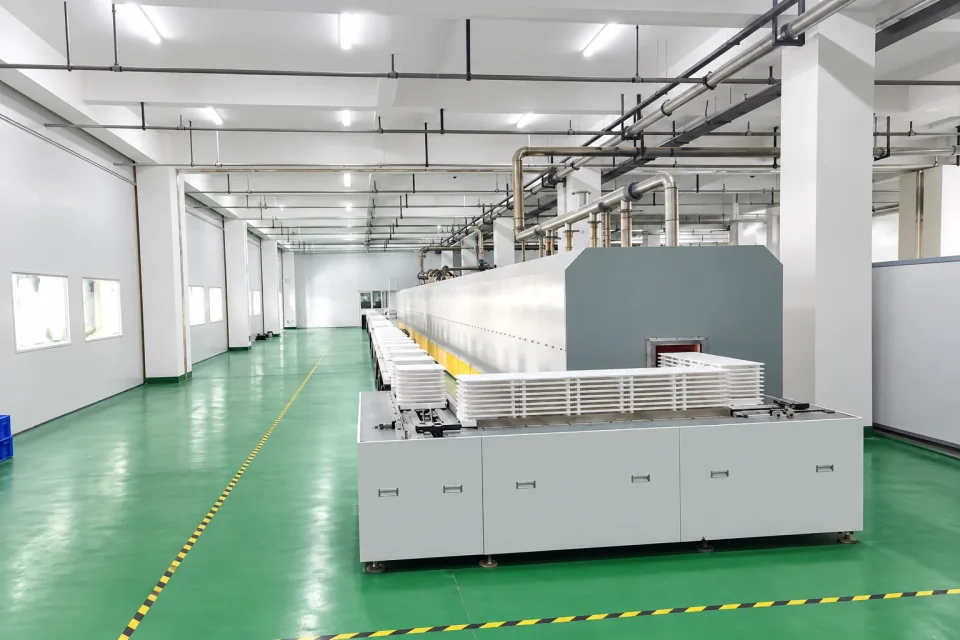
Images show supplied equipment configurations. The presentation image is retouched from the original; other images are original workshop records. Final equipment is defined by the agreed technical proposal.
Contact us
Share your material, temperature profile, atmosphere and target output. Our international sales team will coordinate the technical review with our engineers in Yixing.
Atmosphere rotary furnace
* Required fields